Honour’s Project
City Studio Ottawa
Overview
In collaboration with CityStudio Ottawa, we worked alongside the City of Ottawa on our project, “Understanding Ottawa’s Transportation Management Plan”, based on their Transportation Services Asset Management Plan from 2025. These plans serve as strategic documents that provide a snapshot of the current state of the City's infrastructure while establishing a foundation for future asset management planning and informed decision-making.
You can view the original Transportation Services Asset Management Plans on the City of Ottawa website
FORMAT
Animation, Digital, and Print
ROLE
Lead Graphic Designer, Animator, UX, Video Editor
TOOLS
Adobe Illustrator, InDesign, PremierePro, Figma, PIxilArt
TIMEFRAME
September 2025 - April 2026

Proposed Solution
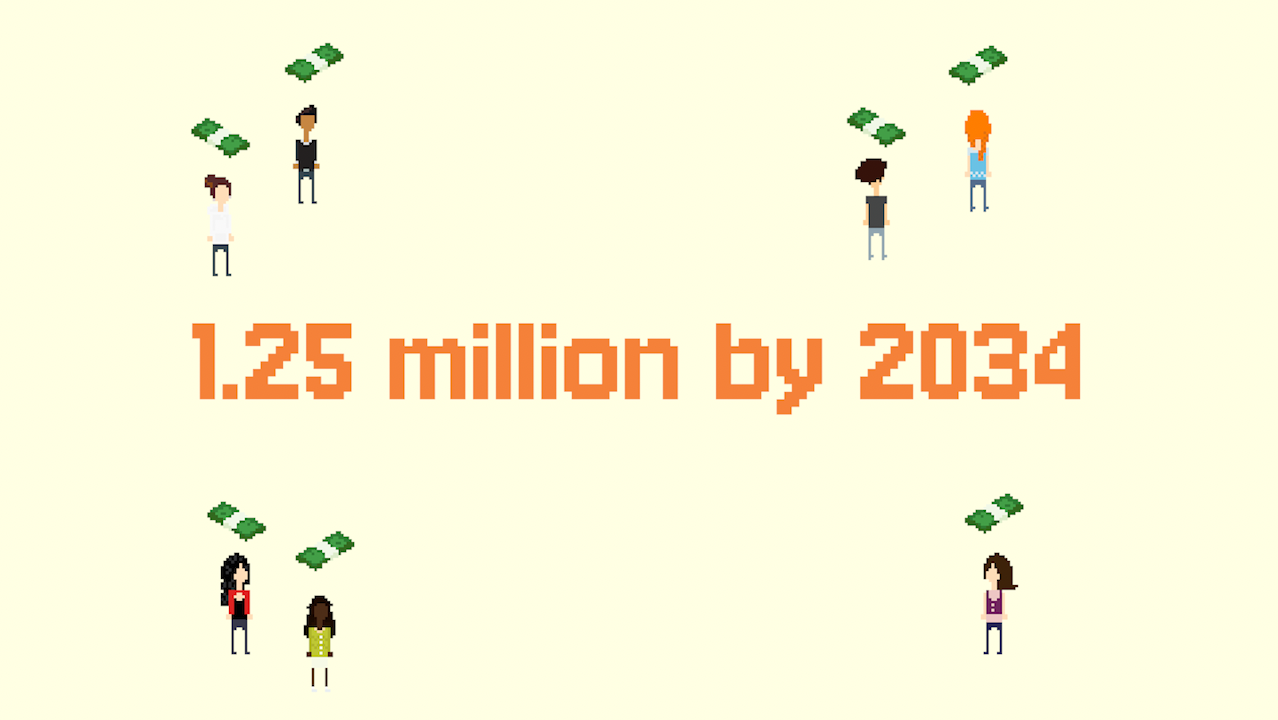
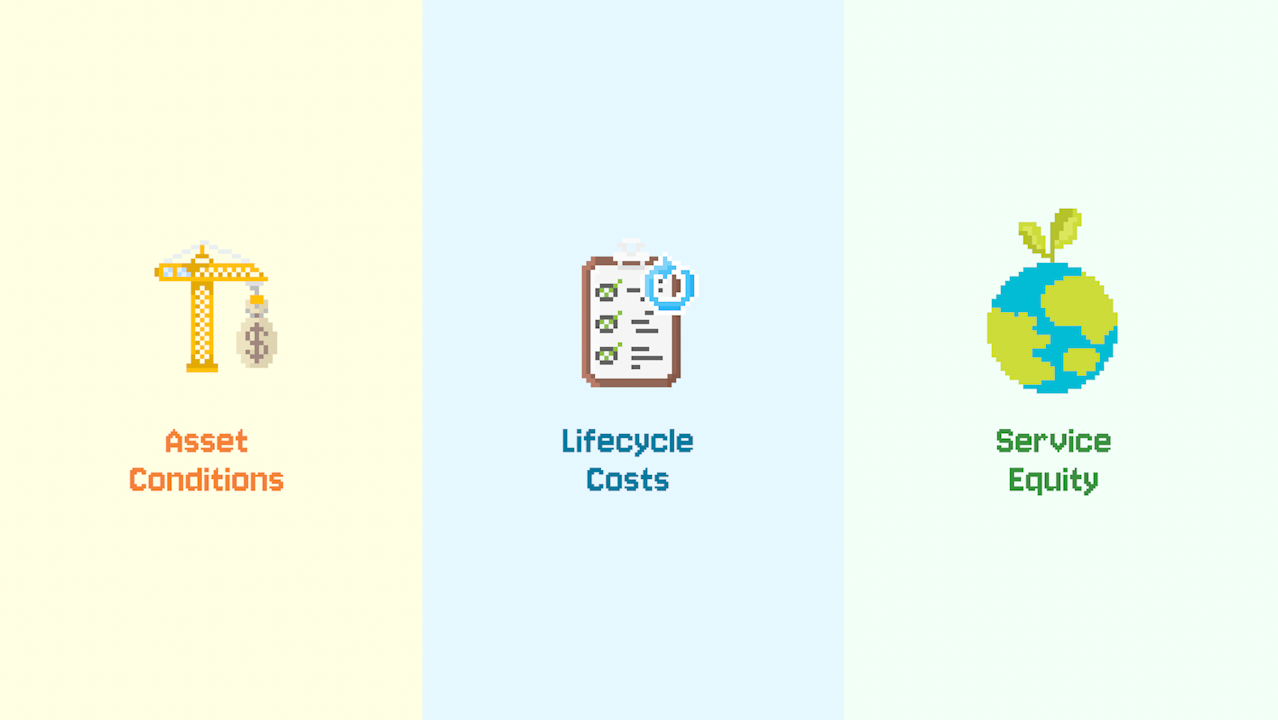
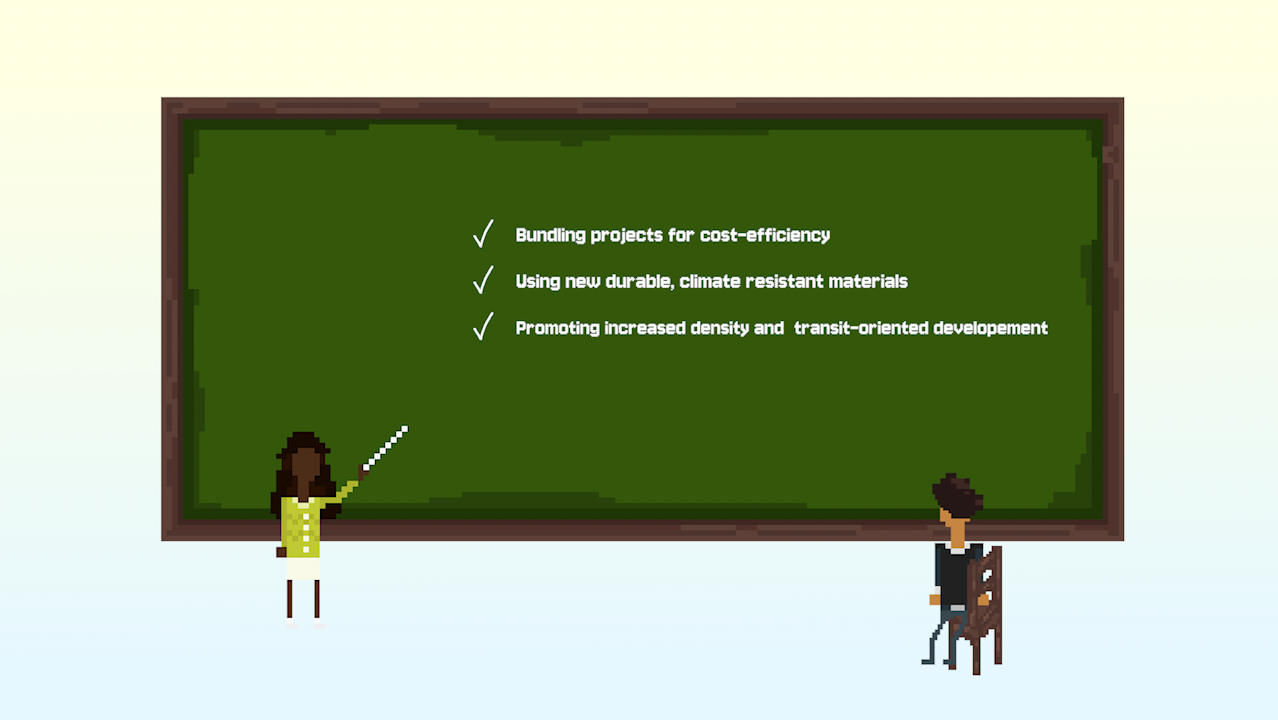
“Understanding Ottawa’s Transportation Management Plan” is a three-minute animation that transforms the original 40-page report into an engaging and educational format. The animation is designed to bridge the gap between public understanding of city infrastructure and municipal asset management strategies while presenting a scalable approach for creating more accessible public communications in the future.
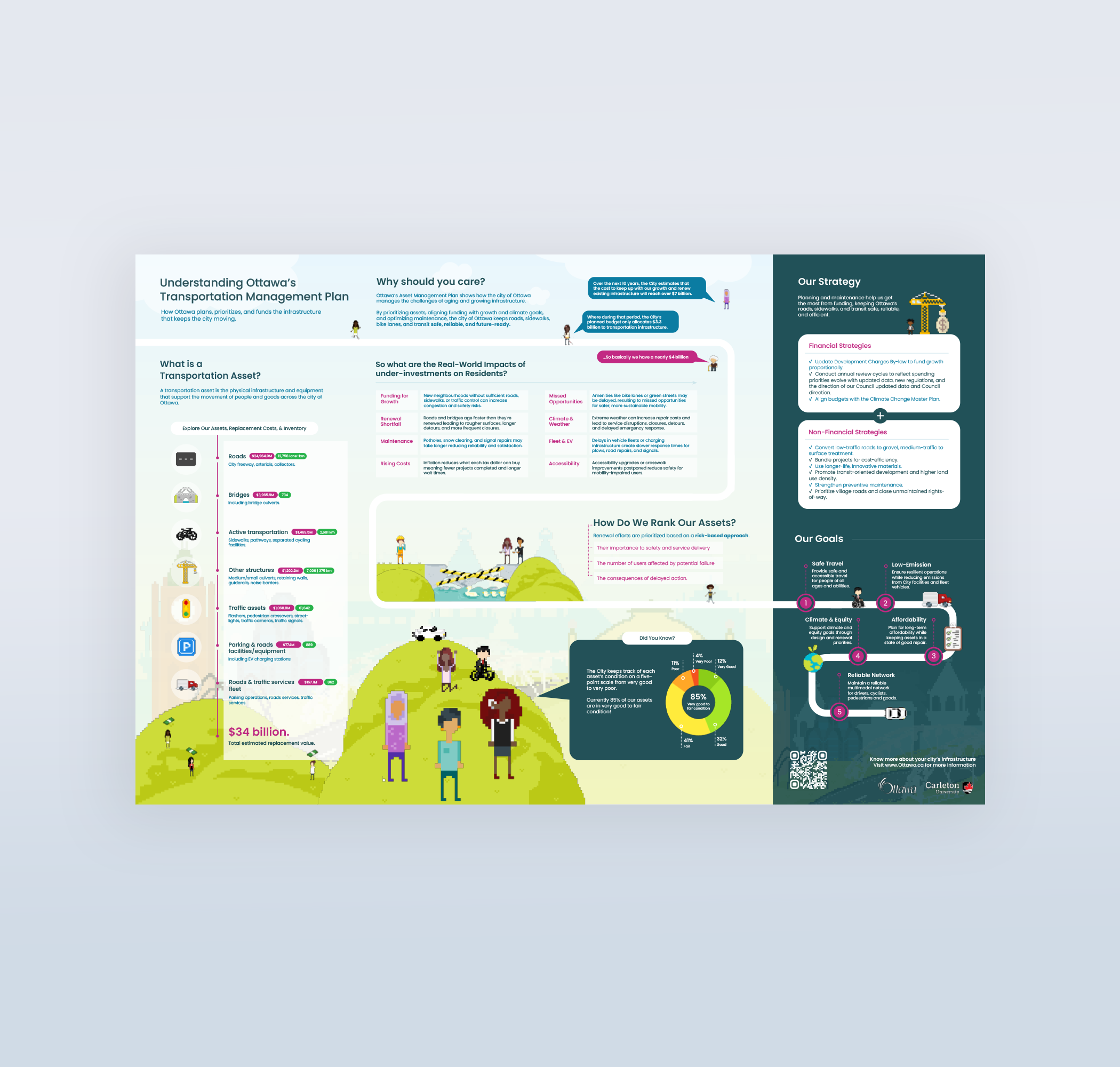
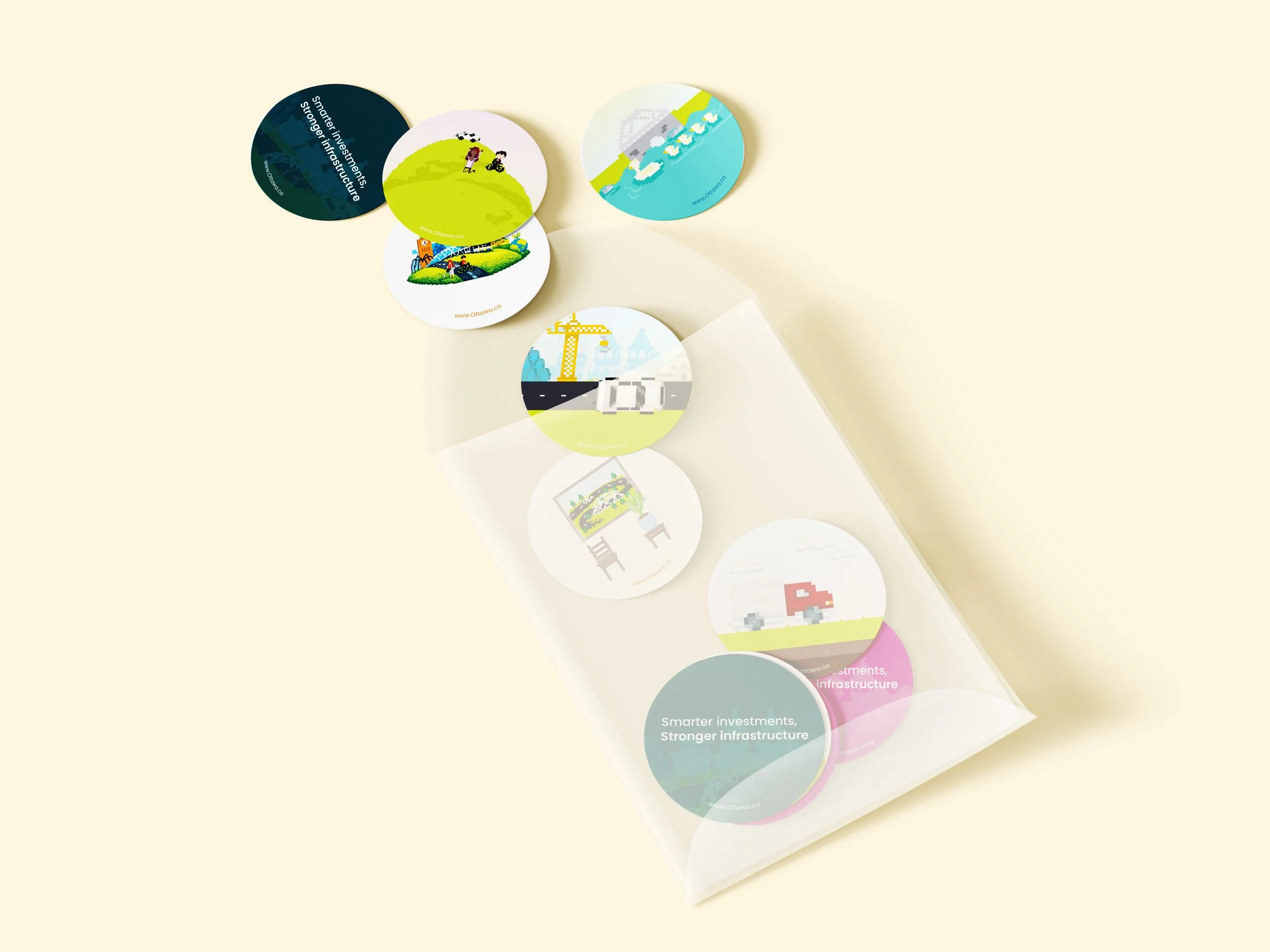
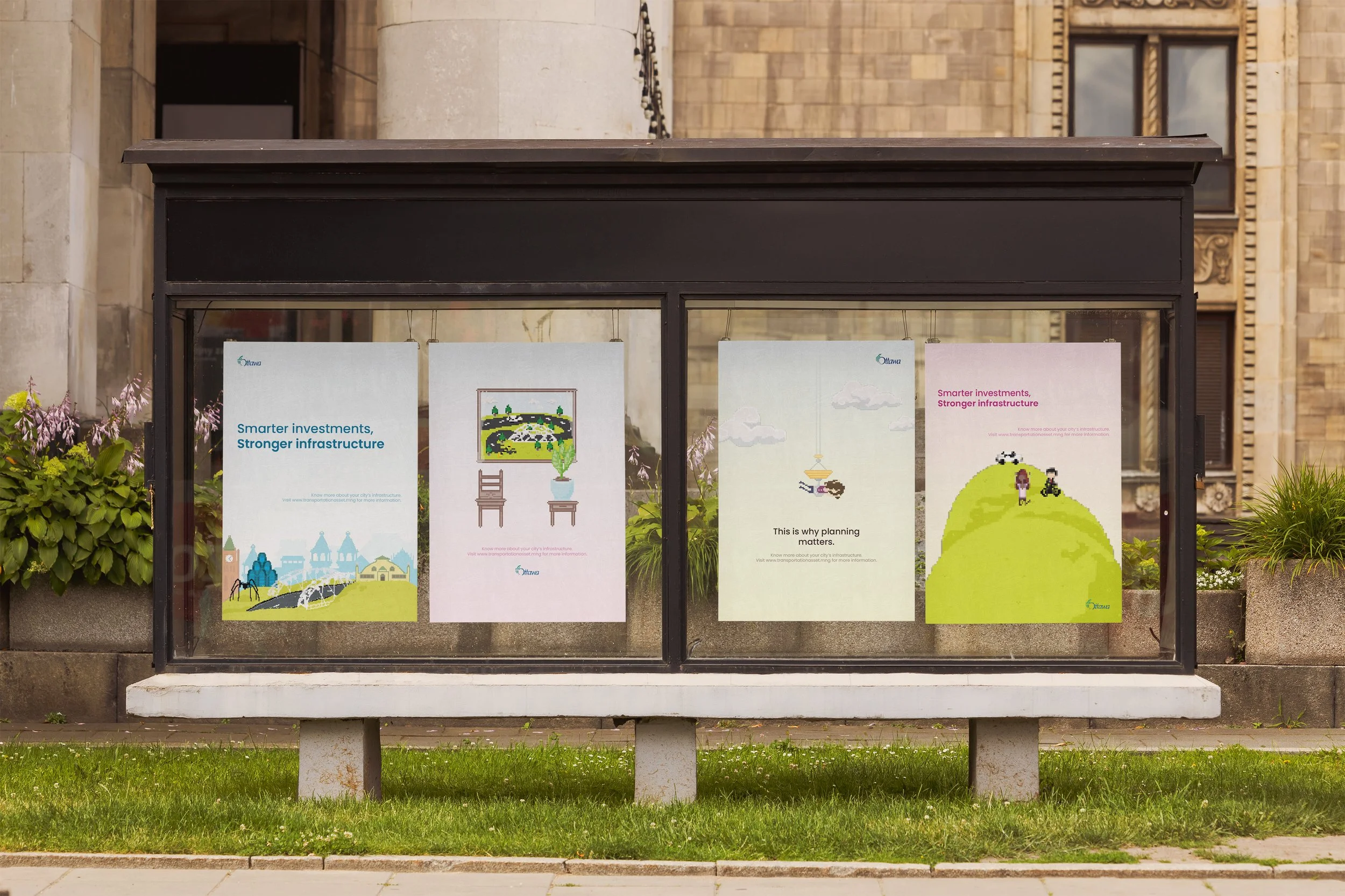
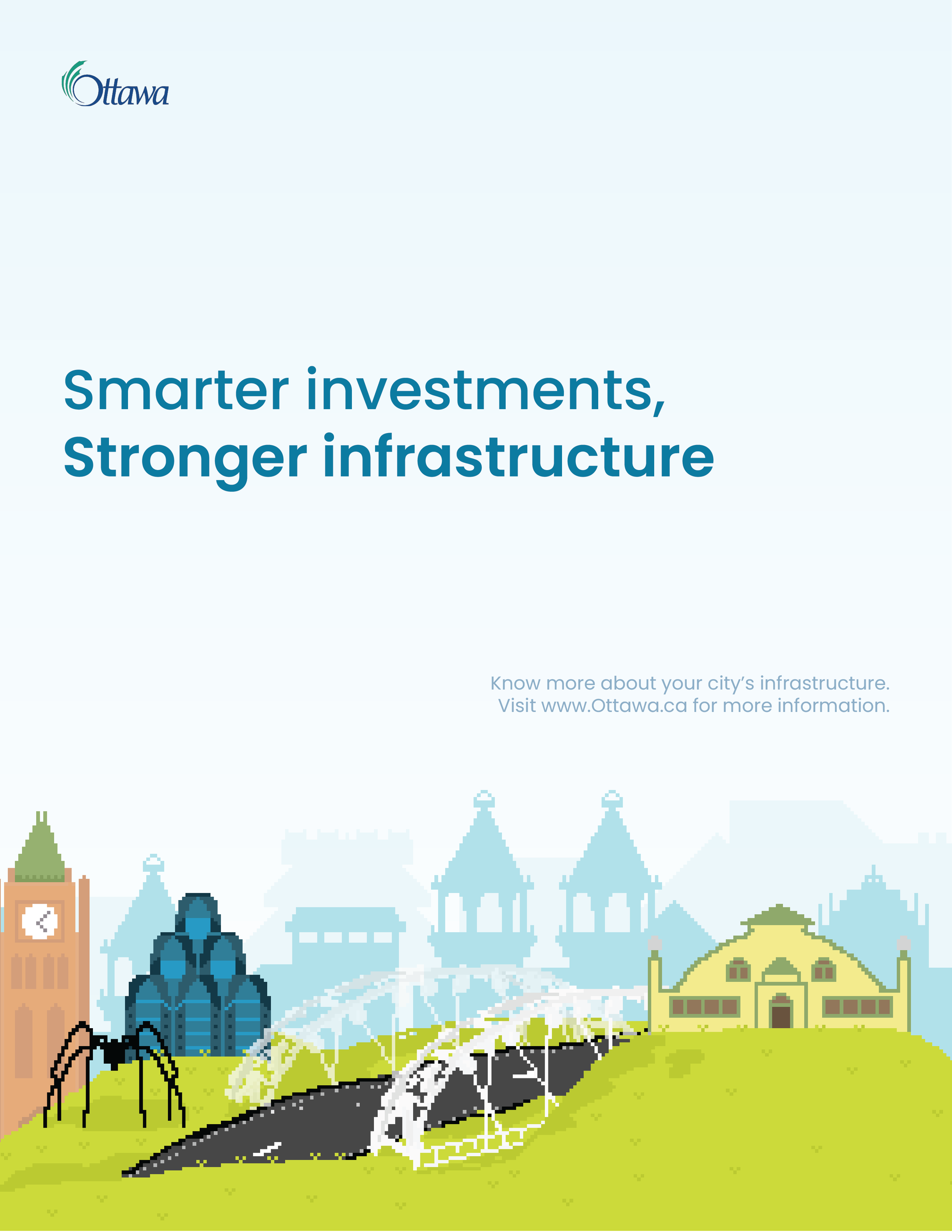
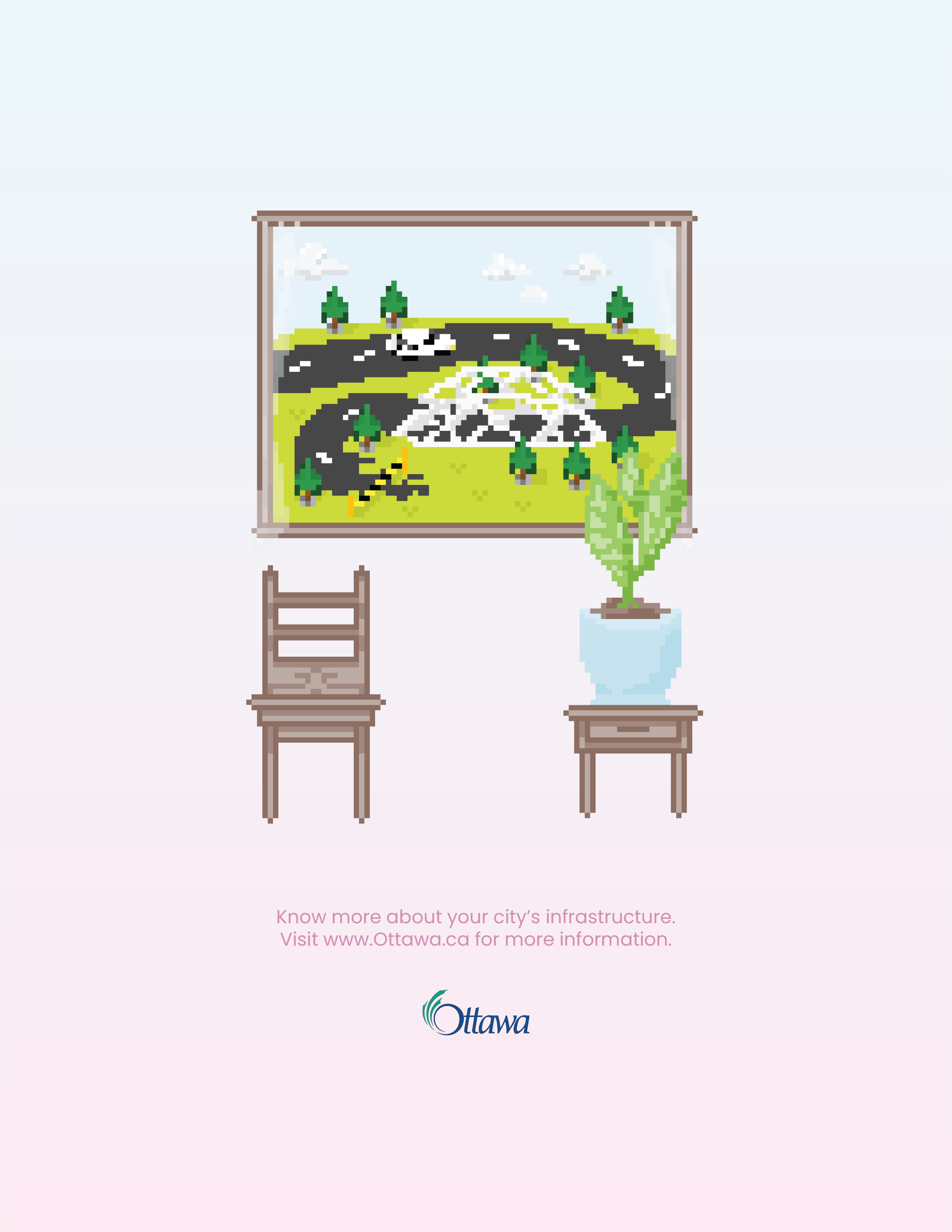
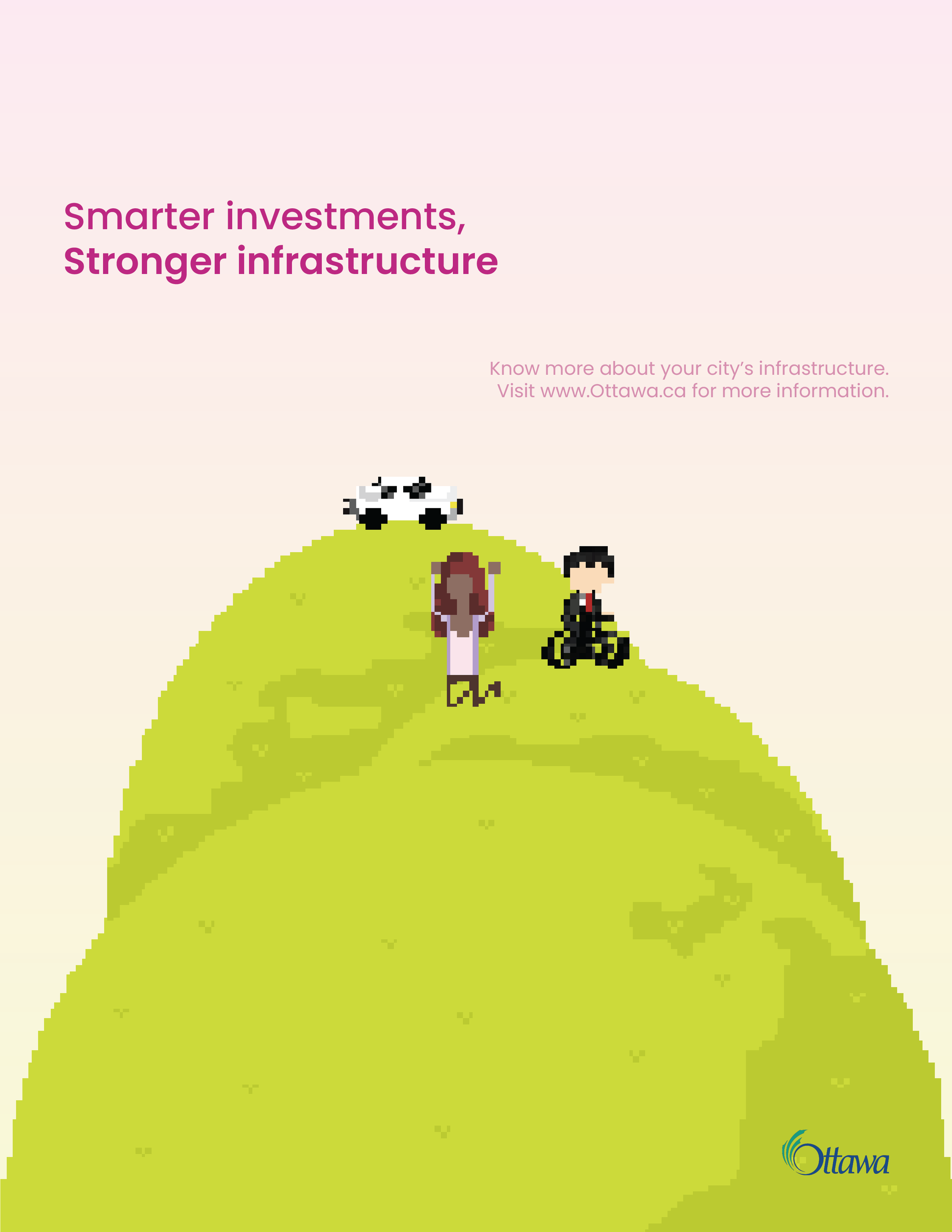
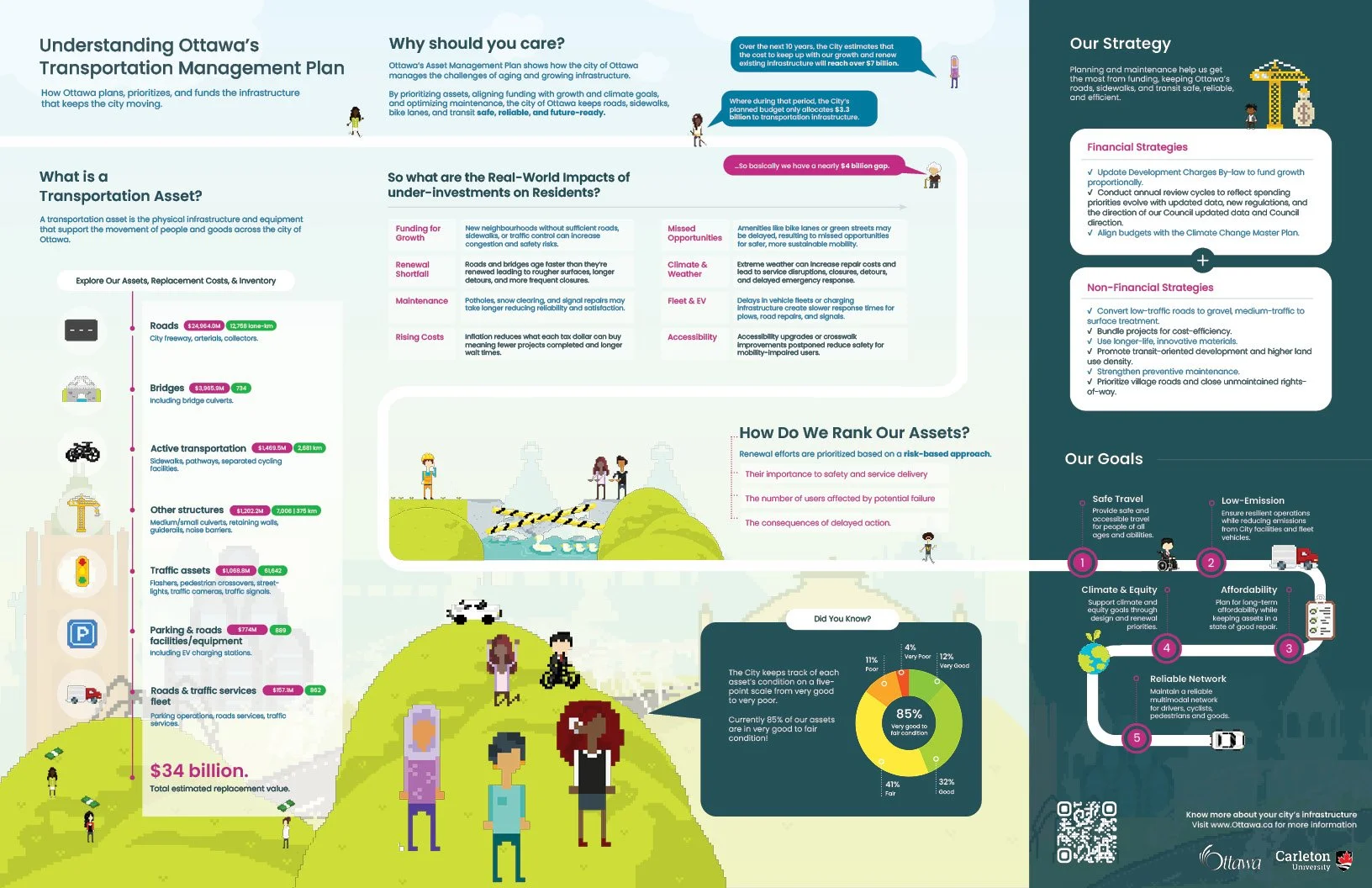
The project also included the creation of an animated video, an infographic, four posters, eight stickers, and a brochure.
Potential Contribution to Digital Media within Government Materials
This project demonstrates how government materials distributed online can benefit from engaging digital formats. It explores how short animations, videos, and simplified infographics can improve accessibility, transparency, and public understanding by breaking down technical language and complex data into plain language. By encouraging the use of multimedia in government communications, this project aims to support the creation of more accessible and engaging content for the general public and broader audiences.
Animation Preview
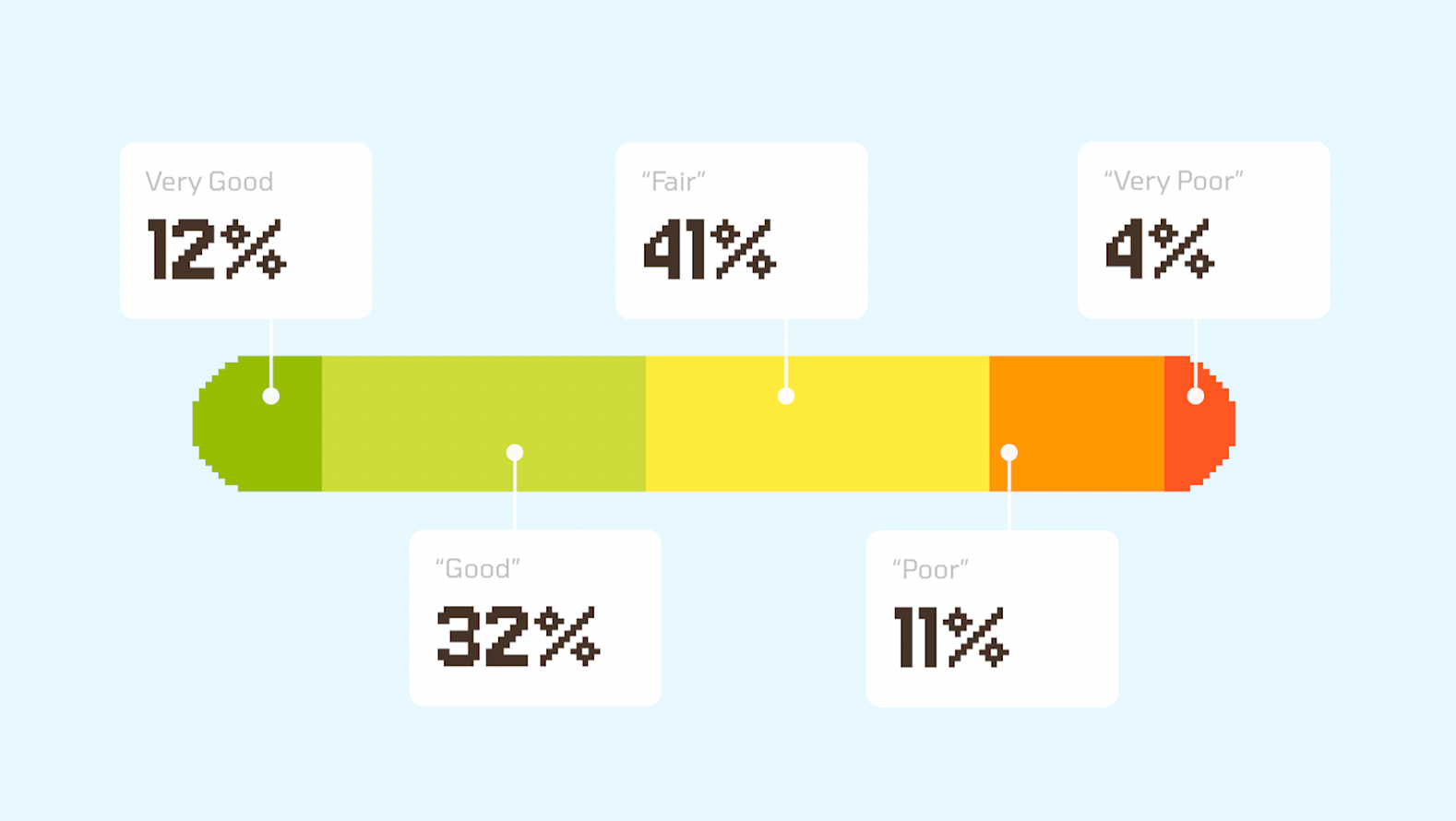
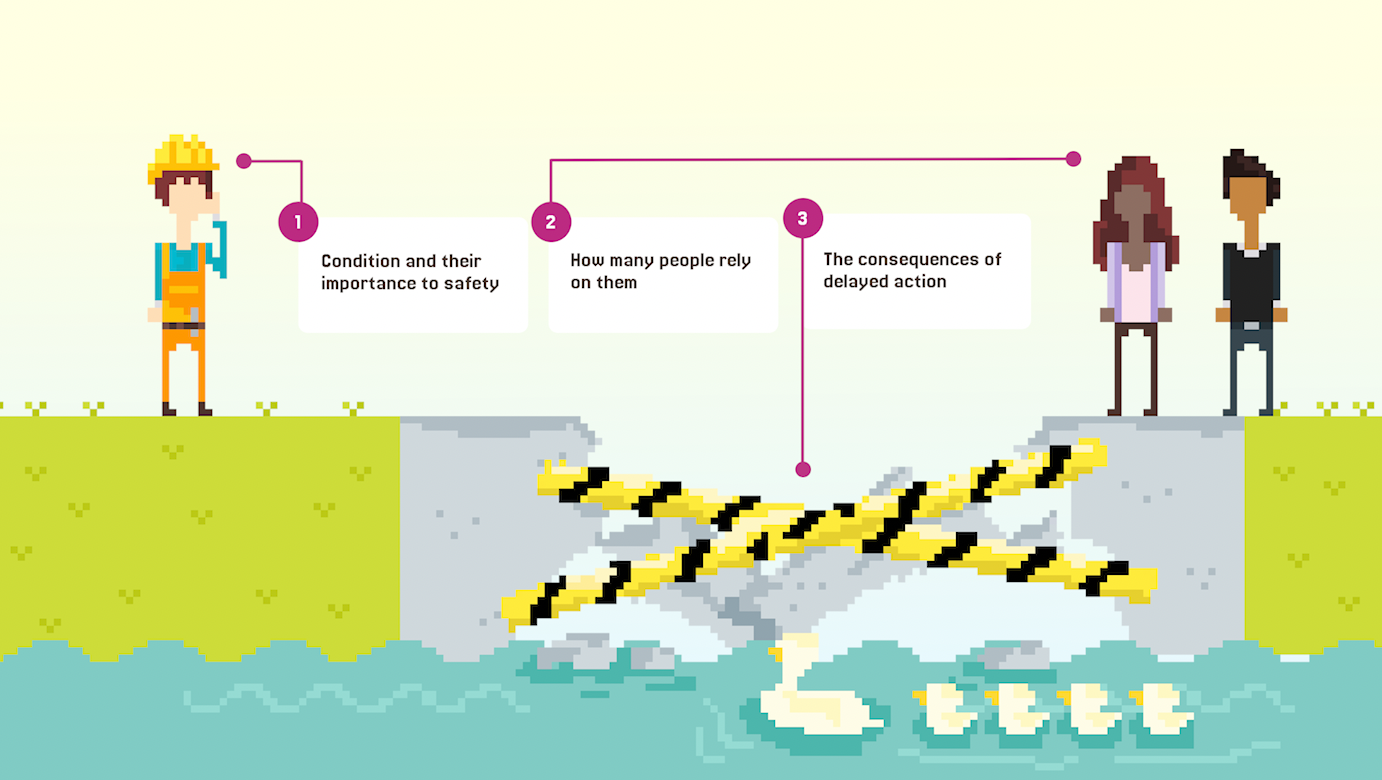
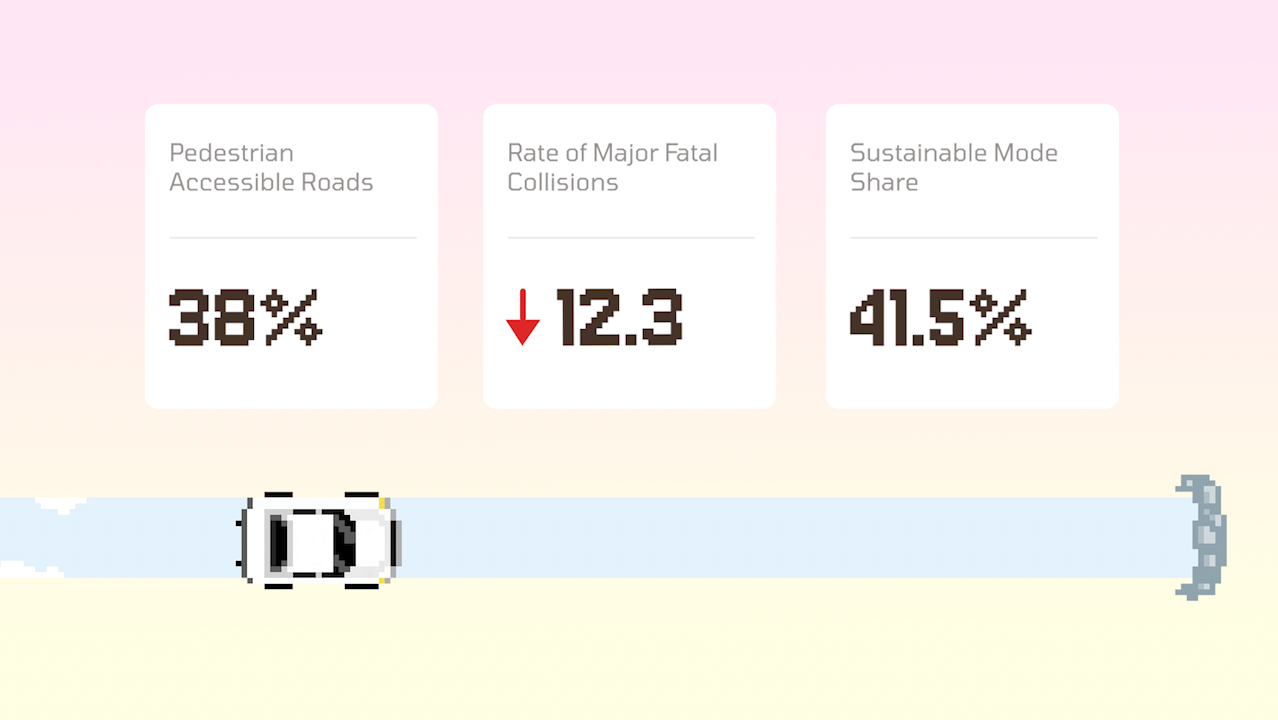
Objective
Transforming the report
Our clients were members of the City of Ottawa team responsible for the Transportation Asset Management Plan. They provided us with the original 2025 Transportation Asset Management Plan, a 40-page technical report, and tasked us with reimagining it for the general public. The project's objectives were to:
Use storytelling and creative communication to explain the report's key information and its importance to the public.
Create an engaging piece of media that could be used long term and adapted for future Asset Management Plans.
Balance technical accuracy and data-driven information with clear, accessible plain language in a condensed format.
Introduce Asset Management Plans in a more engaging, approachable, and welcoming way.

Why 2D Animation?
2D animations and storytelling has been proven as an effective method in condensing complex information into easy to follow material. Compared to static digital media, animation encourages greater engagement and is more likely to be shared, making it a valuable addition to digital learning and public education.
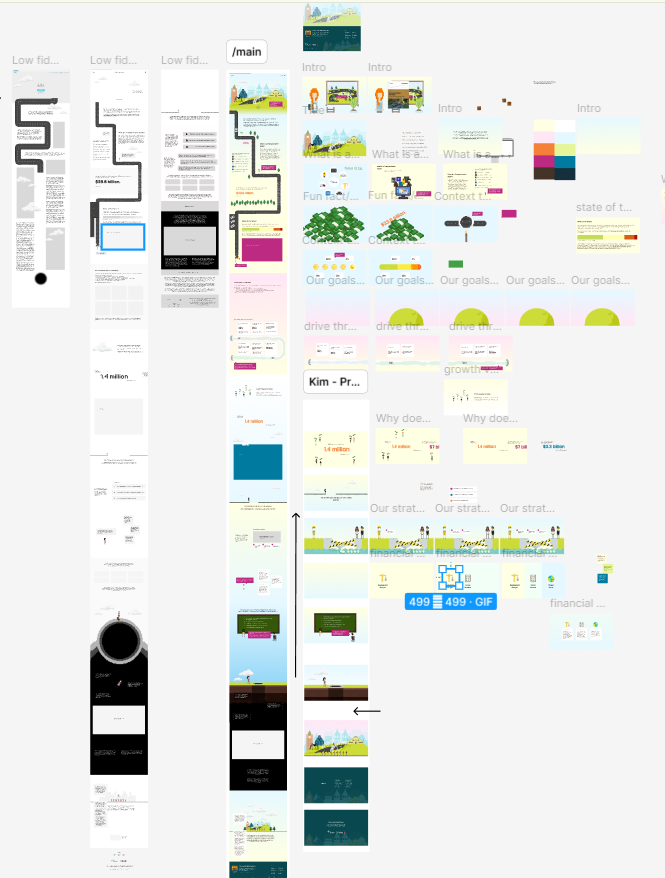
At first, our original concept was an interactive scrollytelling website, a form of digital storytelling that reveals content as users scroll through a webpage. The goal was to reimagine the original 40-page report in a more engaging and accessible format. However, as the project developed, we determined that the website was not feasible within our timeline and available development resources. In response, we proposed creating a 2D animation, which retained many of the storytelling and visual communication strengths of the original concept while remaining achievable within the project's scope.
Visual Development
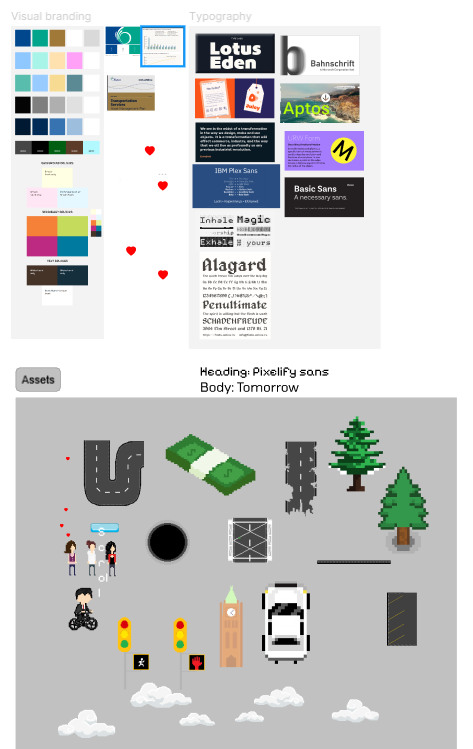
Using the team's mood board and a copywritten script by one of my teammates, I led the development of the project's visual style and created visual assets for the animation. These assets were designed based on the storyboard developed in Figma to ensure a cohesive visual narrative.
The visual assets were later adapted into the project's print materials, including an infographic, posters, stickers, and a brochure, which I designed in Adobe Illustrator and Adobe InDesign.
All pixel art assets were created in PixilArt.
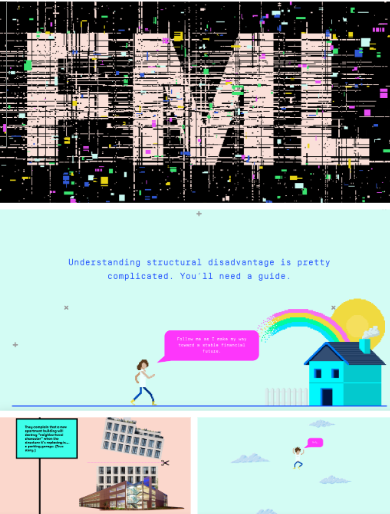
Featured Posters & Stickers








Design Considerations
Pixel Art was chosen as our visual style to meet the comfort and familiarity of our broader audience base.
Since the status and maintenance of our transportation infrastructure affects everyone living in Ottawa, the animation was designed for a wide audience. Whether that be from students, older adults, and anyone interested in learning how the City manages its infrastructure and budget. Originating in the late 1970s, pixel art is closely associated with classic video games and continues to be widely recognized in modern media. What better art style to use than one that has the appeal of making complex information feel more approachable?
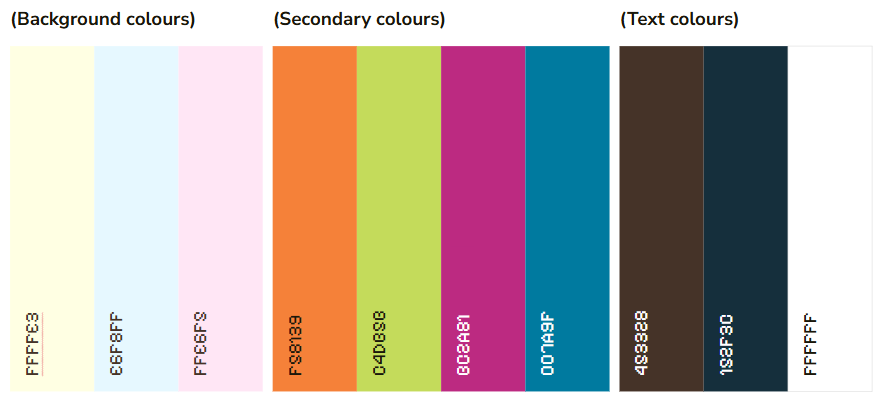
The colour palette was selected to meet standard WCAG contrast guidelines, helping to ensure readability and accessibility for a wide range of users.
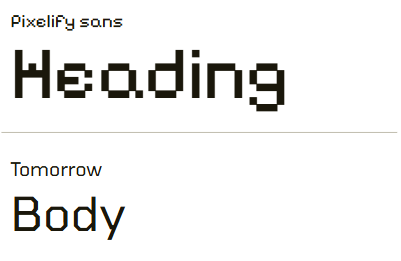
Typography was chosen for its clarity and legibility, making the information easy to read throughout the animation.
To complement the animation, the project also included subtitles, an infographic, and a brochure. These additional formats provided alternative ways for audiences to access and share the information, improving accessibility across both digital and print media.
Creating the animation
As the visual assets for each storyboard scene were completed, I assembled the scenes in Adobe Premiere Pro. I used a placeholder narration to establish the timing and pacing of each scene while another team member recorded the final voiceover.
Once the animation was complete, I handed the project off to the team member responsible for sound design and audio mixing to finalize the video.